 English
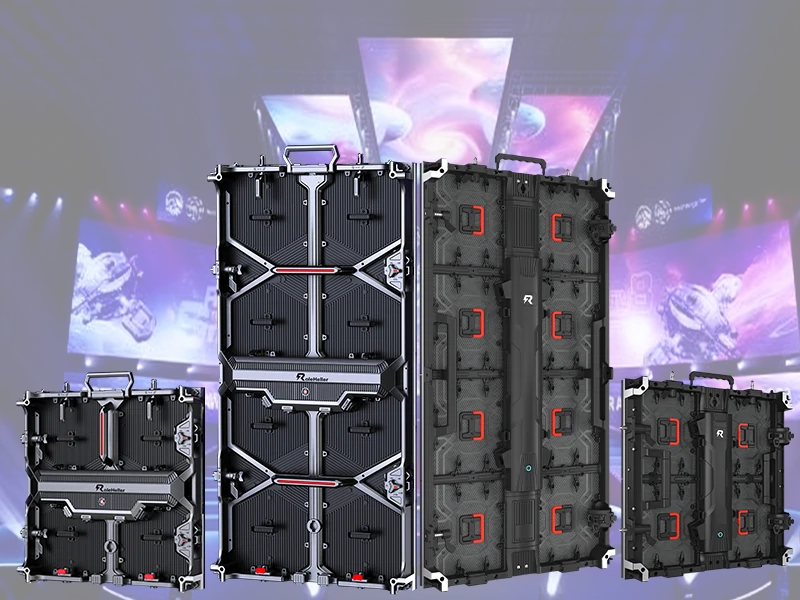
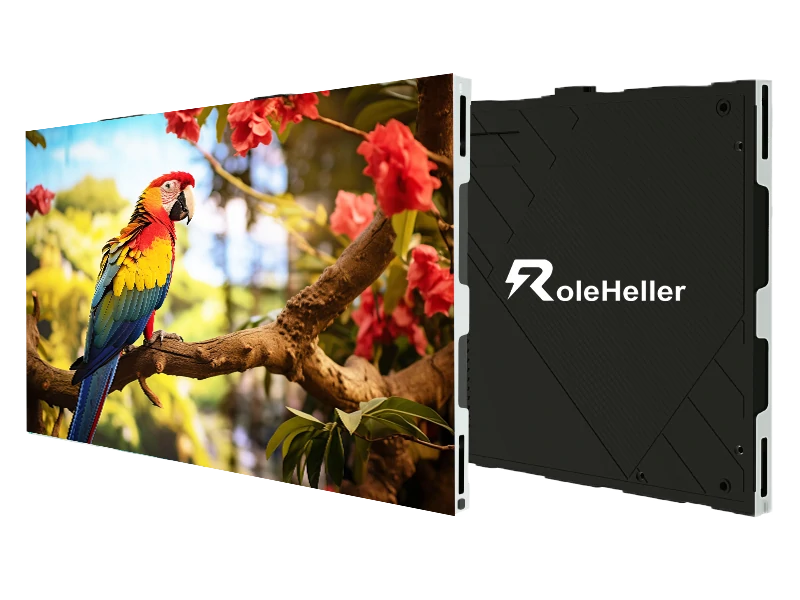
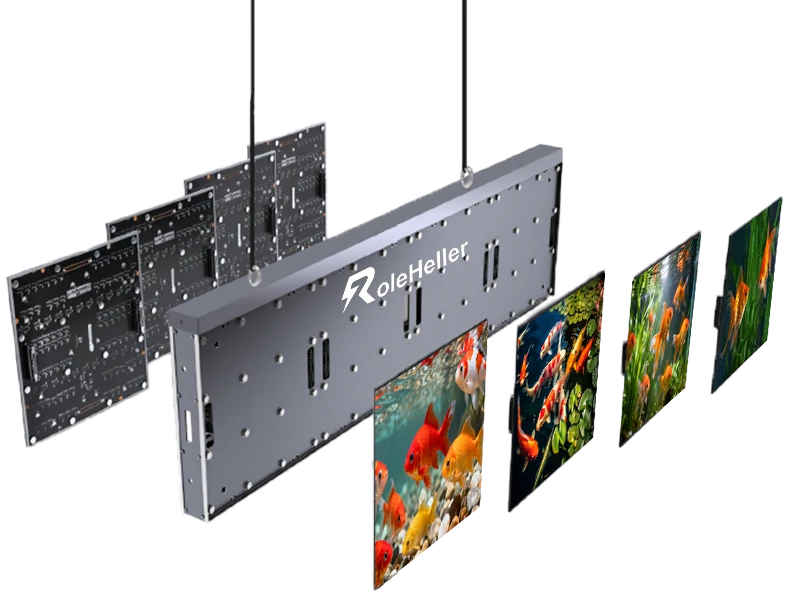
If you're searching for China P3.91 LED video wall manufacturers, the short answer is: top-tier original factories are concentrated in Shenzhen's Bao'an and Longgang districts, factory-direct prices for standard 500×500mm indoor/outdoor rental cabinets range from $110 to $260 per panel depending on specs and order volume, with lead times of 15-22 days and certifications like CE, ETL, and FCC being non-negotiable for Western markets. I've worked with buyers across North America, Europe, and Australia on P3.91 projects for everything from concert stages to corporate event spaces, and I'm going to walk you through exactly what you need to know to avoid getting burned.
Let me give you some context on why this specific pixel pitch dominates the global rental market. P3.91 means the distance between each LED pixel is 3.91 millimeters, giving you a pixel density of 65,536 dots per square meter. It hits the sweet spot between resolution and affordability — sharp enough for viewing distances starting around 4 meters, but significantly cheaper than finer pitches like P2.6 or P2.97.
Here's where P3.91 gets its traction:
Concert and festival stages — the standard pitch for touring acts because it balances image quality with budget and weight
Corporate events and product launches — clear enough for text and video in mid-sized venues
Houses of worship — churches and mosques that need readable lyrics and video without the premium cost of fine-pitch panels
Trade show booths — eye-catching displays that hold up under convention center lighting
Sports venues and fan zones — large-format screens that deliver clear imagery from 10+ meters away
But here's the thing most buyers don't realize — there's a massive quality gap between different manufacturers' P3.91 panels. Two "identical" cabinets from different factories can perform completely differently in terms of color consistency, brightness uniformity, weather resistance, and long-term reliability. That's why choosing the right manufacturer matters more than just picking the right pixel pitch.
The LED display industry around Shenzhen has thousands of companies, and not all of them actually manufacture anything. Some are pure trading companies that buy from one factory, rebrand, and sell to you at a markup. Here's how to tell the difference:
Signs of a genuine factory:
They own SMT (Surface Mount Technology) production lines — these machines cost hundreds of thousands of dollars and are the backbone of LED module production
They have an in-house aging test room where panels run continuously for 48-72 hours before shipping
They can show you their PCB printing, LED placement, and module assembly processes in real time via video call
They manufacture their own die-cast aluminum cabinets or work with a dedicated, long-term die-casting partner
Their business license includes "production" or "manufacturing" in the scope, not just "sales" or "trading"
Signs you're dealing with a middleman:
They can't provide a live video tour of the production floor
They say "our factory is in a different city" when you ask to visit
Their pricing is suspiciously low — if it's 30%+ below market, they're likely marking up from a cheaper source or cutting corners on components
They can't name the specific LED chip brand they use
Their website has generic stock photos instead of actual factory images
I had a client last year — a mid-size AV integrator in Germany — who'd been buying P3.91 panels from a supplier on Alibaba for two years. Great prices, smooth communication, everything seemed fine. Then they ordered a batch for a church installation and discovered the panels were using recycled LED chips with inconsistent color temperatures. Some panels looked warm, others looked cool, and the client's customer was not happy. Turns out the "manufacturer" was a trading company that had switched suppliers without telling anyone. That kind of thing happens more than you'd think.
Not all P3.91 panels are created equal. Here's what actually matters on a spec sheet:
| Specification | Budget Tier | Mid-Range | Premium Tier |
|---|---|---|---|
| LED Chip Brand | Unknown/domestic generic | Kinglight, Silan | Nationstar, Nationstar Gold |
| Driver IC | Basic FM series | Macroblock MBI5124 | Macroblock MBI5252 / Chipone ICN2053 |
| Refresh Rate | 1920Hz | 3840Hz | 3840Hz+ with PWM technology |
| Brightness (Indoor) | 800-1000 nits | 1000-1200 nits | 1200-1500 nits |
| Brightness (Outdoor) | 4500-5000 nits | 5000-5500 nits | 5500-6500 nits |
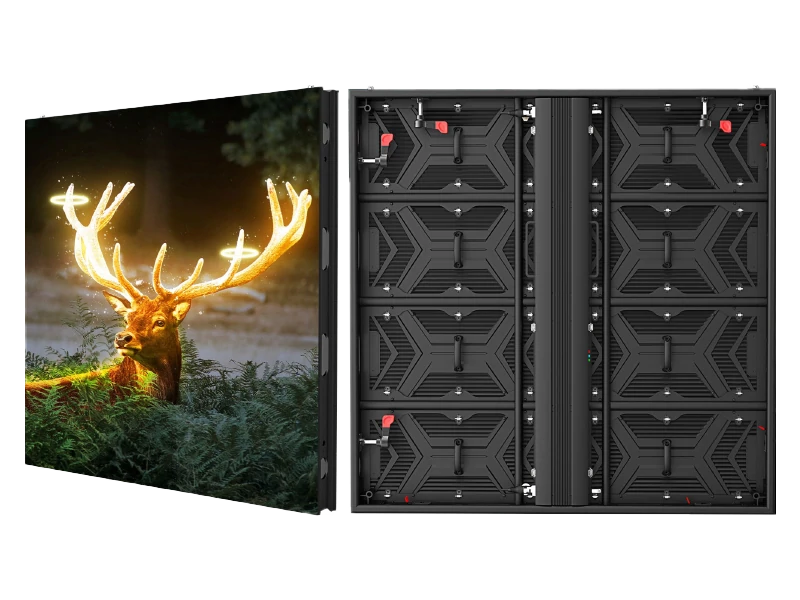
| Cabinet Material | Sheet metal, heavier | Die-cast aluminum standard | Die-cast aluminum, CNC-machined |
| Weight (500×500mm) | 9-12 kg | 7-8.5 kg | 5.5-7 kg |
| IP Rating (Outdoor) | IP65 basic | IP65 with sealed connectors | IP65 front / IP54 rear with full sealing |
| Power Supply | Generic brand | G-Energy or equivalent | Mean Well |
| Price per Panel (500×500) | $90-$130 | $130-$190 | $190-$260 |
The differences between tiers might seem small on paper, but they compound significantly over the lifespan of an installation. A panel using Nationstar LEDs with a Macroblock driver IC and Mean Well power supply will consistently outperform — and outlast — a panel using generic components. The upfront cost difference of $40-$60 per panel translates into years of additional reliable service.
Let me give you concrete numbers based on current market conditions for P3.91 panels from Chinese manufacturers:
Indoor P3.91 Rental Cabinets (500×500mm, die-cast aluminum):
Sample/small quantity (1-10 pieces): $150-$210 per panel
Medium orders (20-50 pieces): $130-$170 per panel
Large orders (100+ pieces): $110-$140 per panel
Outdoor P3.91 Rental Cabinets (500×500mm, IP65, 5000+ nits):
Sample/small quantity: $180-$260 per panel
Medium orders: $150-$210 per panel
Large orders: $130-$180 per panel
A few things to keep in mind when you see a price quote:
Does it include the receiving card? Some manufacturers quote panel-only prices, others include the receiving card. A Novastar or Colorlight receiving card adds $15-$30 per panel.
What about shipping? FOB Shenzhen is standard, but you'll need to budget for ocean freight ($800-$2,000 per CBM depending on destination) and customs clearance.
Payment terms matter. Standard terms are 30% deposit, 70% before shipment. If a supplier demands 100% upfront, that's a red flag — especially for a first order.
So you've found a manufacturer that checks all the boxes. What happens next? Here's the typical workflow:
Send them your project details: screen dimensions, pixel pitch preference, indoor or outdoor, installation type (rental vs. fixed), quantity, and destination country. A responsive manufacturer will come back within 24-48 hours with a detailed quote. If they take a week to respond, that's not a great sign for after-sales support either.
Always order at least one sample panel before committing to a full production run. Yes, samples cost more — usually 1.3x to 1.5x the bulk price — but most manufacturers refund the difference when you place the full order. With the sample, you can test brightness, color accuracy, build quality, and connector fit in your actual environment.
Standard production takes 15-20 days for common specs. During this time, you should receive:
Production schedule confirmation
Progress photos at key milestones
Pre-shipment aging test video (panels running for 48-72 hours)
QC report showing brightness uniformity, color temperature consistency, and dead pixel count
Ocean freight timelines:
To US West Coast: 18-25 days
To US East Coast: 28-35 days
To Northern Europe: 30-38 days
To Australia: 15-22 days
Air freight is an option for urgent orders or samples — typically 5-7 days door-to-door — but costs 4-5 times more than sea freight.
I've watched this happen too many times, so let me save you the headache:
The cheapest P3.91 panel is cheap for a reason. B-grade LED chips, no conformal coating on the PCBs, generic power supplies that fail within a year, inflated brightness claims. When that panel starts showing dead pixels at month six, you're paying for replacement panels, return shipping, and labor to swap them out. The "savings" evaporate fast.
Your P3.91 LED wall is only as good as the signal feeding it. A quality video processor from Novastar, Colorlight, or Brompton handles scaling, color management, and input switching. Budget at least $500-$1,500 for a processor depending on your resolution and input requirements.
LED panels need maintenance. Dead pixels happen, power supplies fail, receiving cards go bad. When you place your order, negotiate a spare parts package — typically 2-3% extra modules plus a few power supplies and receiving cards. The cost is minimal compared to the hassle of ordering single replacement panels internationally later.
The panels are only part of the total system cost. For rental applications, you need flight cases and quick-lock systems. For permanent installations, you need a precision mounting frame. Budget an additional 15-25% of your panel cost for the mounting infrastructure.
CE, ETL, and FCC aren't just stickers — they require actual testing by accredited laboratories. Ask for the certificate number and verify it on the issuing body's website (TÜV, SGS, Intertek for CE; ETL/Intertek for US listings). I've seen fake certificates that looked completely legitimate at first glance.
This is a question I get a lot, and honestly, the answer comes down to component quality and manufacturing process. Here's what determines longevity:
LED chip quality is the single biggest factor. Nationstar LEDs — particularly their Gold series — are rated for 100,000+ hours with minimal brightness degradation. Budget chips from unknown brands may start showing significant color shift and brightness loss within 20,000-30,000 hours.
Power supply quality matters more than people think. Mean Well power supplies are the industry standard because they handle voltage fluctuations, provide stable current to the LEDs, and have built-in protection against surges and overheating. Generic power supplies are the number one cause of premature panel failure.
Conformal coating on the PCB protects against moisture, dust, and corrosion. For outdoor P3.91 panels, this is absolutely critical. Some budget manufacturers skip this step entirely or apply a thin spray that wears off within a year. A proper conformal coating process involves dipping or selective spraying followed by UV curing.
Cabinet sealing for outdoor applications determines whether your panels survive real weather. IP65 means the cabinet can handle water jets, but the quality of the sealing gaskets, connector seals, and cable entry points varies significantly between manufacturers. Look for manufacturers who use waterproof connectors (like Neutrik or Amphenol) rather than generic alternatives.
After years of working with buyers and visiting factories across Shenzhen, here's what I've come to believe: the P3.91 segment is one of the most competitive in the LED display industry, and that's both good and bad for buyers. Good because prices are driven down and innovation is rapid. Bad because the race to the bottom on price pushes some manufacturers to cut corners.
My advice is straightforward — find one or two manufacturers you trust and build a relationship with them. Visit the factory if you can, or at minimum do a thorough video call tour. Order samples and test them in your actual installation environment. Once you've found a supplier who delivers consistent quality, communicates well, and stands behind their warranty, stick with them. The time you invest in vetting pays dividends on every future order.
Don't chase the absolute lowest price. The difference between a $120 panel and a $170 panel might seem significant when you're buying 100 units, but over a 5-year installation life, that $50 per panel difference buys you zero dead pixels, consistent color, reliable performance in extreme weather, and no emergency replacement orders at 2 AM before a major event. That's worth every cent.
Indoor P3.91 panels typically have brightness levels of 800-1500 nits, no waterproofing, and lighter cabinet construction. Outdoor P3.91 panels feature 5000+ nits brightness for sunlight visibility, IP65 waterproofing, sealed connectors, and reinforced cabinets to handle weather and temperature extremes. The two are not interchangeable — using an indoor panel outdoors will result in rapid failure, while using an outdoor panel indoors is overkill and more expensive.
Indoor P3.91 panels typically consume 120-200W per square meter on average, with peak consumption reaching 400-600W per square meter when displaying full white content. Outdoor P3.91 panels consume more — typically 250-400W per square meter average — due to higher brightness requirements. Energy-efficient models with common cathode technology can reduce consumption by 20-30%.
Novastar controllers (such as the VX600 or VX1000 series) are the most widely compatible and commonly used with P3.91 panels from Chinese manufacturers. Colorlight and Brompton processors are also excellent choices, with Brompton being preferred for high-end broadcast and rental applications where color accuracy is critical. The processor should match your total pixel count and input requirements.
For rental P3.91 panels with quick-lock connectors, a crew of 2-3 people can install a 5×3 meter wall (30 panels) in approximately 2-3 hours. Permanent installations take longer due to mounting frame assembly, cable management, and calibration — typically 1-3 days depending on screen size and complexity. Front-maintenance designs reduce installation time by eliminating the need for rear access space.
Most reputable manufacturers offer 2-3 years of warranty coverage for indoor P3.91 panels and 2 years for outdoor panels. Warranty typically covers manufacturing defects including LED chip failure, driver IC failure, and power supply failure. It does not cover physical damage, water damage to indoor panels, or power surge damage. Replacement modules are usually shipped via express courier within 3-5 business days of a valid claim.
Multiply the number of horizontal panels by the pixels per panel width, and do the same vertically. For example, a P3.91 wall that is 8 panels wide and 4 panels tall (each panel being 128×128 pixels) gives you a total resolution of 1024×512 pixels. For a 16:9 aspect ratio screen, a common configuration is 16 panels wide by 9 panels tall, giving 2048×1152 pixels.
P3.91 panels with a 3840Hz refresh rate work well for camera capture without visible flicker or scan lines. However, for professional broadcast environments where cameras are close to the screen, P2.6 or finer pitches are often preferred for sharper on-camera image quality. If your budget allows, P2.6 panels provide noticeably better results on camera while still being cost-effective for most rental applications.
Indoor P3.91 die-cast aluminum cabinets typically weigh 7-8.5 kg per 500×500mm panel, which translates to approximately 28-34 kg per square meter (4 panels per m²). Outdoor P3.91 panels with IP65 sealing are heavier — typically 9-12 kg per panel, or 36-48 kg per square meter. Always verify that your mounting structure can support the total weight including frames and cabling.
Technically yes, but it's strongly discouraged. Panels from different manufacturers — even with the same pixel pitch — will have different color temperatures, brightness levels, and LED chip characteristics. This results in visible color inconsistency across the video wall that cannot be fully corrected through calibration. Always source all panels for a single installation from the same manufacturer and ideally the same production batch.
Regular maintenance includes cleaning the panel surface with a soft, dry cloth to remove dust and debris, checking connectors for looseness or corrosion every 6 months, ensuring adequate ventilation around the panels to prevent overheating, running periodic aging tests to identify early failures, and keeping spare modules and power supplies on hand for quick replacements. For outdoor installations, inspect sealing gaskets and waterproof connectors annually and reapply conformal coating every 2-3 years.
.jpg "How Do You Find Reliable Wholesale Outdoor LED Video Wall Manufacturers?")
.jpg "China P2.97 Indoor LED Video Wall Manufacturers | Factory Direct, CE ETL Certified")